
Canicool
...how to be cool at Paris menswear week

It’s menswear week in Paris and it’s the first week of the sales and it’s a canicule.[1] In the Marais, where I seldom go, I have a meeting. There are people in lines for the sales outside Lemaire, outside Supreme. But nowhere is as crowded as the supermarket, where small bottles of water are still warm in the freezer section. As always, cool is difference, this time because everywhere is hot.
I go into DSM, which is one digit short of a mental health diagnosis. It is, as Phillip Larkin wrote, a large cool store, but it doesn’t sell cheap clothes. The walls are white and the garments presented like sculpture and, as in an art gallery, everyone looks cool: even shabbiness, even Normcore looks intentional. And, also, as in an art gallery, there’s a mix of real buyers and enthusiasts like me—or like Bedwyr Williams’ man who absolutely loves clothes—in long-saved-for or thrifted Dries or Comme.
Outside the shop, those big cylinders in the DSM courtyard are covered with Comme des Garcons flags. The flags are brightly coloured but everyone is in muted tones. There’s a woman standing in front of one cylinder and is this a photo opportunity?, like the protestors have suddenly become to the tourists strolling the street of the bourgeois french?[2] She holds a strip of entry bracelets.
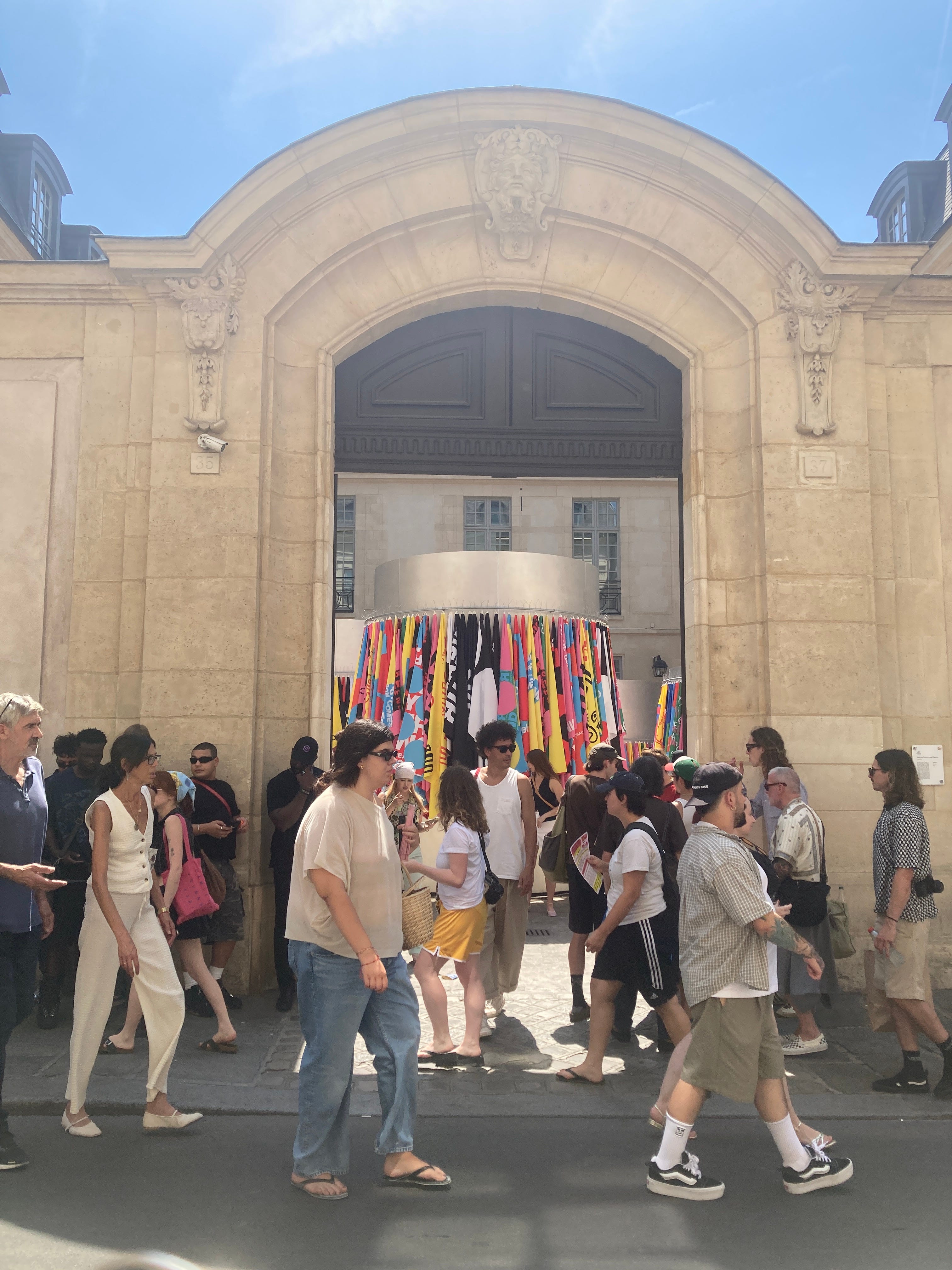
The protestors?
A few doors down members of France’s general trades union, the CGT, are outside Uniqlo, protesting the low salaries and bad working conditions that continue despite the company’s rising profits (up from 23.2 to 33% between ’22 and ’24). They demand an immediate 100% increase in salaries, a management detox and a cleanup of working facilities. The protestors are mostly young and they are dressed in Uniqlo-quiet colours and loose shapes. Even on strike, they’re on-brand.
Back to the Comme cylinders:
—It’s an event for a new shoe. If you want to go to the event you have to wait in line. Because—capacity.
Hello, manufactured exclusivity. This isn’t a show for invitees only, yet there has to be some sort of barrier. As outside the shows, the sales, there’s a queue.
A car passes and beeps, and the protestors hoot and cheer like the football supporters last night when France scored their first goal against Norway.
I’d watched the Lemaire show on video two days ago. It was the hottest day in France ever. The clothes on the catwalk were Normcore just like those of the Uniqlo protestors, and the watching buyers. I always look at a catwalk audience’s clothes, and the front row’s anxious-desirous glances are something I see repeated on the faces of the protestors waiting for that car to pass. Who is in it? I don’t know. Someone to do with Uniqlo? This is the car they shout at.
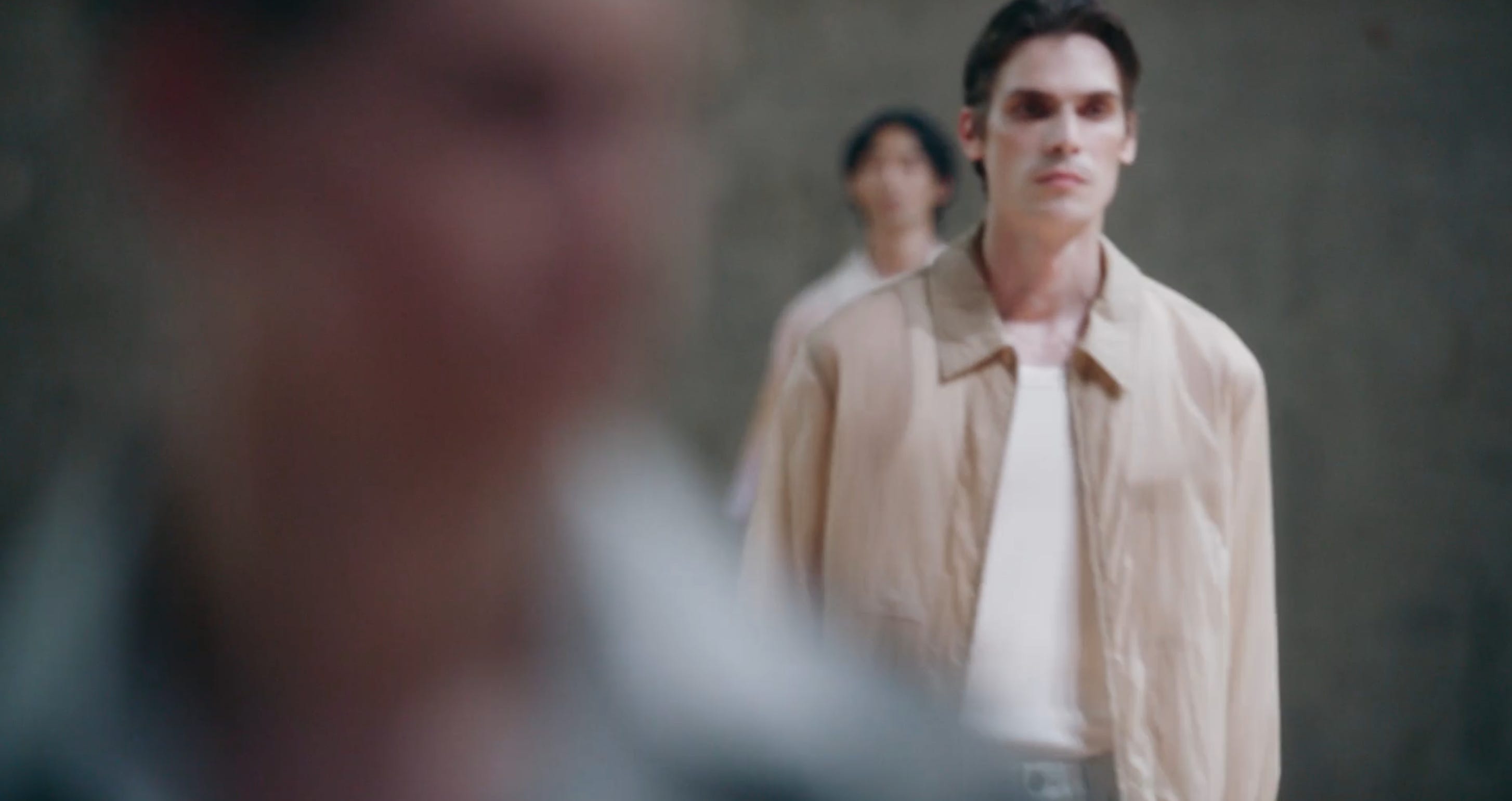
Normcore was coined by “trend forecasting group” K-Hole, in 2014, as a reaction to what they termed “mass indie”, or the commercialisation of individuality, concluding that “the most different thing to do is to reject being different all together”.
Normcore wasn’t a style but a mode: it was not about the clothes (there are times when it’s Normcore to dress outré) but about positive herd thinking; the outfit-matching facilitating what K-Hole termed “empathy”.
Unsurprisingly, Normcore was taken up in its physical expression and became as fashion-marketable as any other concept, which is not to say concepts are a bad thing. Kant called them ‘norms,’ and said we can’t think without them.
*
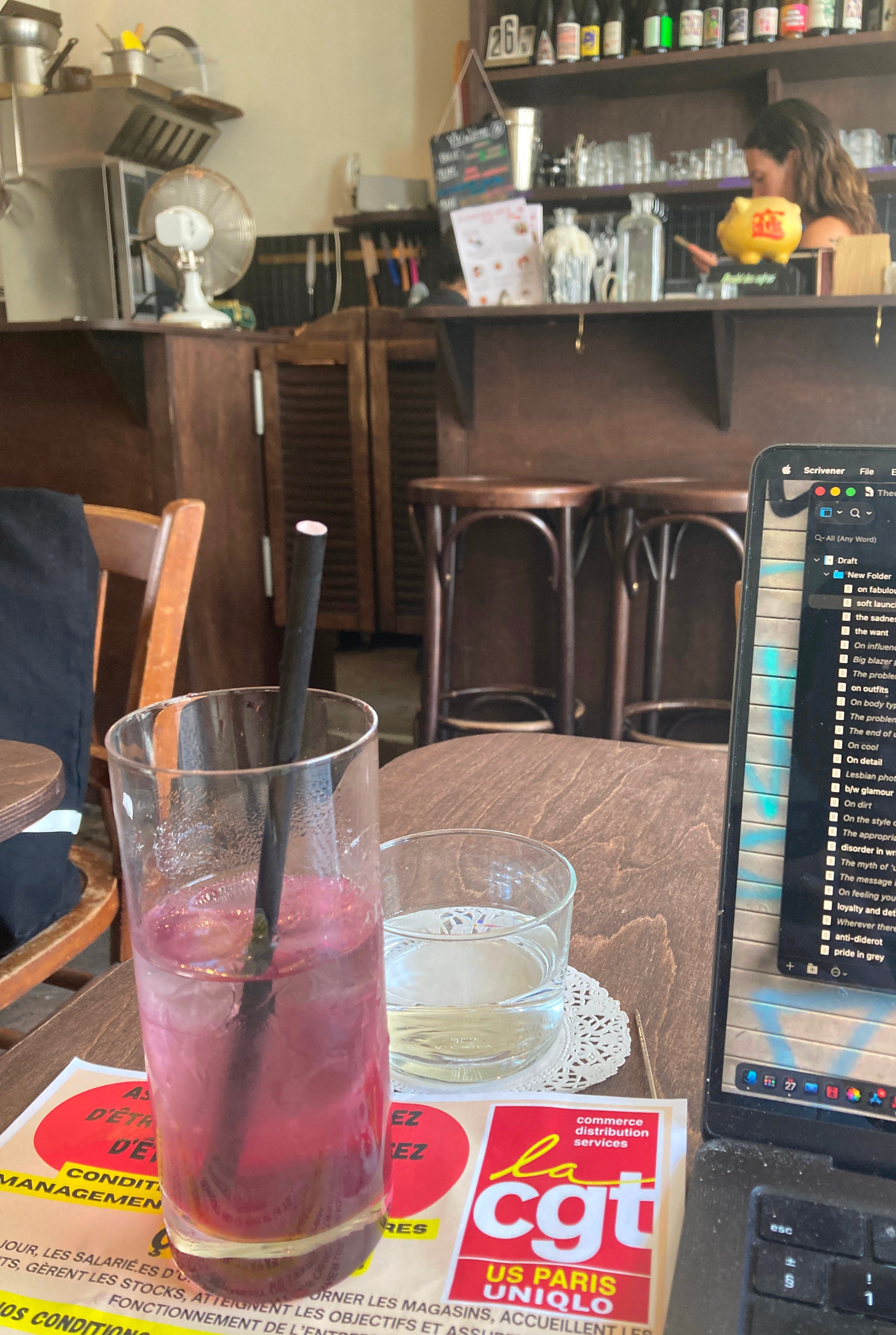
Later, in lesbian-founded queer bar, Le Coyote, all the women look like lesbians and so do all the men and all the non-binary people too, and I like it. I order a cherry soda and click on a proof of K-Hole co-founder Dena Yago’s new book, That Figures, shortly to be published by After 8 Books. If ‘queer’ is still cast as ‘difference’, and different clothes—as Normcore Larkin wrote—have the power to conjure how “separate and unearthly… women are, or what they do,” as “love,” then not everyone here is dressed with ‘difference’ in mind—it’s just I’m looking differently. The queerness is in my gaze and I am reading every difference as evidence of the same.
Love is what will remain of us, according to Larkin, a possibly surprising keyword from a poet with such a bad rep in personal relationships. Still, there is no guarantee of solidarity in appearances. If the difference of sameness can be read as queer, the Lemaire models (and the catwalk audience) were not the same Normcore as the Uniqlo union members, whose visual codes were, in any case, subtly different; the Uniqlo-wearers somehow more born-to-it, without the anxiety of referencing the effortlessness of Normcore as luxe. A union, like Normcore, is not about being the same, but about solidarity of difference, which, in an age of fragmented individualism, in which we’re not only encouraged to enjoy your symptom, but perform and monetise it (as anyone who’s ever applied for an arts grant will know) is a valuable thing.
Meanwhile on the catwalk, Micheal Rider at Celine went for what could be called abnormcore: minimalist silhouettes, each with an integrated self-difference—a brown suit with a perfectly-balanced flash of red ankle-zip or a block of bright shirting— which the audience (a typically atypical outfit: dark structured suit with butter yellow cowboy boots) empathetically mirrored. JW Anderson at Dior was all about the wonky bow tie. What could be a the name for these small differences? The production of new fashion words is a fashion thing that, like cool itself, is also all about difference and repetition, but we could go down that poststructuralist k-hole forever.
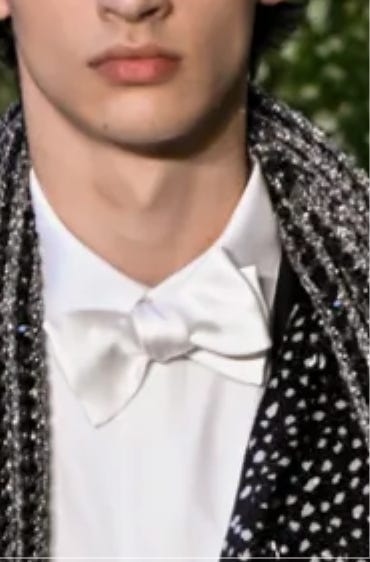
It’s difficult to have real cool on a catwalk. The menswear week models looked just as blandly beautiful as any other socially-approved bodytype thrust into clothes they haven’t chosen or ever worn before (tho isn’t this a bit like Normcore’s abnegation of the personal?). The interaction between the body and clothes that produces the real difference of cool can only really take place outside the catwalk’s homosartorial space. But Anderson’s was a gesture towards this difference, a hint that it existed somewhere, sometimes. Nonetheless.
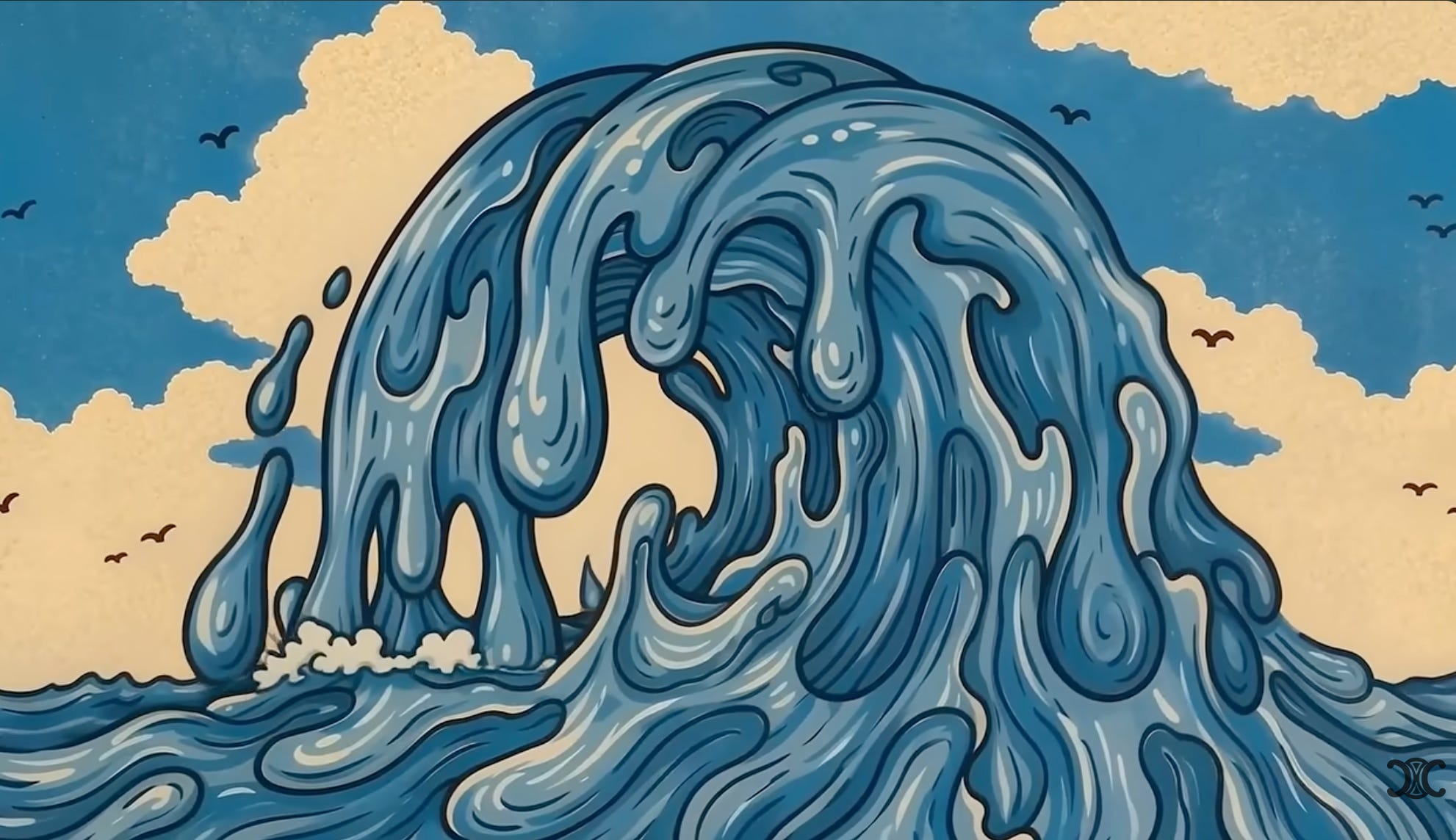
And everywhere, at the shows, there were sounds of water: crashing cartoon waves at Celine, a rainstick at Lemaire. And, elsewhere, in every primeur in the rue Rambuteau, baskets of cherries on sale the size of apricots: this was different, this was new.
Text © Joanna Walsh

[1] Heatwave
[2] rue des Francs-Bourgeois